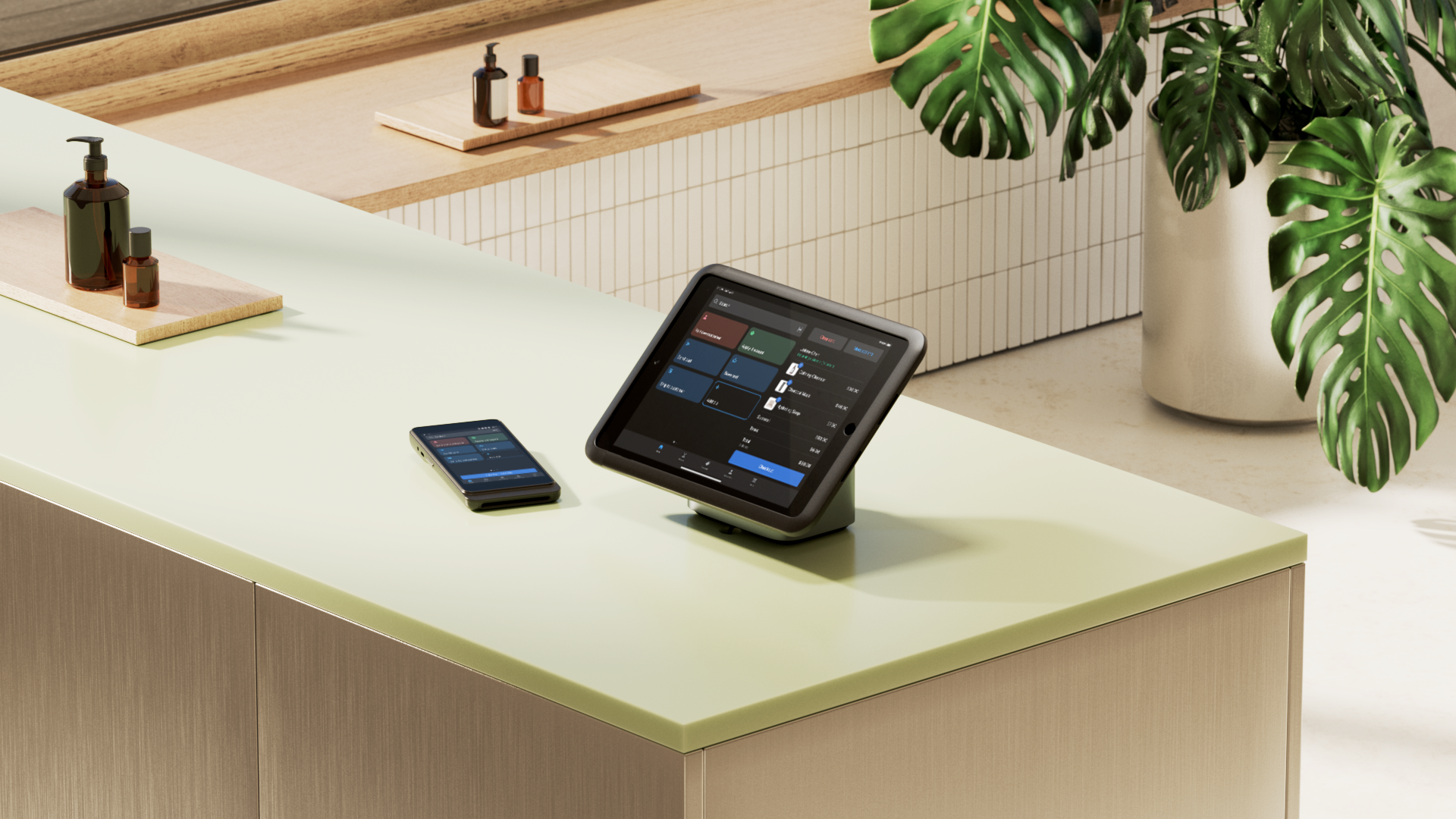
Customer data integration (CDI) is the process of consolidating customer data from every channel and system—ecommerce, in-store, email, loyalty, wholesale—into a single unified customer view. Most retailers already collect more customer data than they know what to do with. Purchase histories in the ecommerce platform. Loyalty activity in a separate customer relationship management platform (CRM). In-store transactions in the point-of-sale (POS) system. But data sits isolated in each system. When that data stays separate, teams have a harder time using it across marketing, service, and sales.
Many businesses are still working through that challenge. Supermetrics' 2026 Marketing Data report found 36% of marketing teams lack systems integration that enables data activation. Demand Gen's 2026 report shows over two-thirds of marketers view low contact data quality as the biggest barrier to revenue growth.
CDI addresses this by consolidating customer data from every touchpoint into a single customer view. That unified view becomes the foundation for personalized touchpoints across the entire customer journey.
This guide covers how CDI works, where integration efforts typically break down, and why connecting systems isn't enough. The distinction between integrated data and truly unified data determines whether your investment pays off.
What is customer data integration?
Customer data integration is the process of consolidating customer data from every channel and system into one unified view. Also called a 360-degree customer view, bringing scattered information into one clear picture creates a single source of truth. This helps you better understand what customers like, how they behave, and what they need.
Shopify is the only commerce platform that natively integrates these data streams into a unified model. Brands can manage everything in one place without relying on disjointed apps or costly middleware, which is why Shopify's total cost of ownership (TCO) is up to 33% better than the competition, according to a study commissioned from a leading independent consulting firm.
"Shopify's unified approach to data management leads to a substantial decrease in the time and technical resources spent on maintenance, eliminating the need for middleware by up to 60%," says Corey Hnat, director of marketing at Pepper Palace.

360-degree customer view
When customer data is fully integrated, every team operates from the same 360-degree customer view. For luxury fashion retailer Diane Von Furstenberg, that means store associates can see a customer's online purchase history, active loyalty balance, and recent returns before the conversation starts.
"With our previous commerce platform, customer data was siloed," says assistant store manager Joanna Puccio. "That made it difficult for our stylists to offer the kind of bespoke service our clients expected. We needed to see the full scope of their interests, purchases, and preferences at a glance."
Now, with a 360-degree customer view accessible from Shopify POS, Diane Von Furstenberg's retail team can:
- Retrieve a customer's favorite colors or ideal size to personalize product recommendations
- Segment customers by behavior or order history and proactively invite them to private pre-launch parties
- Notify shoppers when a product they've shown interest in is back in stock, either by text or email (whichever they prefer)
This shared view is what allows teams to act on customer data in real time, and it's what makes the broader benefits of CDI possible.
Customer data integration benefits
- Improved customer experience and personalization
- Faster, more accurate decision-making
- Reduced operational costs and complexity
- Better compliance and data governance
- Increased productivity and simplified data workflows
Once the 360-degree view is in place, the impact shows up across the business. Here are the main benefits of customer data integration:
Improved customer experience and personalization
According to the EY POS Market Report (November 2024), retailers using unified commerce can achieve up to an 8.9% increase in sales. This is partly driven by a clearer view of what customers have purchased, what interests them, and what they might want next.
CDI is what makes that shift operational. With Shopify, purchase history, loyalty activity, browsing behavior, and in-store transactions exist in one record, allowing you to move beyond broad audience segments to recommendations and offers built around what an individual customer has actually done.
"We've come to realize that each of our customers has a unique relationship with the brand," says Curtis Ulrich, director of ecommerce at Aviator Nation. "Whether they met us at a retail store or they discovered us at a music festival or they came to a spin class, all of those are unique data points that we can understand about the customer."
"Brands need to have a deep understanding of who their customer is and how they want to interact with that brand," Curtis says. "And Shopify, as our main partner, plays a large part in that."
Faster, more accurate decision-making
When data is scattered, marketing might see different numbers than operations, creating conflicting plans. Marketing plans a promotional push based on stock levels last updated yesterday. Customer service teams recommend a product the shopper has just returned. Each team is working rationally, but from incomplete data.
A central CDI system gives everyone the same facts. A flash sale can be pulled before it oversells. A loyalty promotion can be extended to the right segment within hours. A regional underperformer can be identified and addressed before end-of-quarter reviews.
The value of unified data becomes clear when examining what successful brands actually track: 85% of businesses earning over $1 million annually track revenue consistently. Meanwhile, 57% track profit margin and 52% track average order value (AOV), compared to less than half of smaller businesses tracking these same metrics.* This tracking gap illustrates why integrated customer data matters: you can't make decisions on metrics you can't see across systems.
Reduced operational costs and complexity
CDI reduces operational costs and technical complexity by giving teams one reliable source of customer data. With fewer disconnected systems to manage, your staff can focus more on helping customers instead of fighting with complicated systems.
Shopify's unified data approach has been shown to eliminate the need for connection software by up to 60%, or approximately $20,000, per year. Retailers using Shopify POS report, on average:
- 25% lower annual software subscription and maintenance costs
- 27% lower annual middleware costs
- 89% lower annual third-party support costs
Better compliance and data governance
Centralizing data makes compliance and governance easier to manage across the business. You know what data you're holding and where it is, which makes it easier to meet data regulations that carry fines for noncompliance.
A Qualtrics 2026 global consumer trends report found 46% of customers will more willingly share their data if businesses become more transparent about what they're collecting. A similar figure (45%) expect to have the ability to control and/or delete their collected data themselves.
When customer data is unified into a single view, fulfilling a data access request doesn't mean querying five platforms, reconciling the results, and hoping nothing was missed. A deletion request is the same: You can action it in the CDI platform and have it update across every source to permanently delete customer data when requested.
Increased productivity and simplified data workflows
CDI can increase productivity by reducing the time spent switching between systems to report, analyze, and act on customer data.
Customer data integration challenges
These outcomes are only possible when data is truly unified. However, most businesses run into significant barriers before they get there.
Customers expect a smooth, personalized shopping experience whether online, on social media, or in physical stores. But our recent personalization report shows marketers typically use between 7 and 10 different technologies to personalize customer experiences.
If even one connection between these systems breaks or updates incorrectly, business processes can stop working. Tech teams need to fix urgent problems instead of spending their time innovating.
Data silos across disconnected systems
Keeping multiple integrations running smoothly requires constant technical work. This includes:
- Regular updates and security fixes
- Major rebuilds whenever core systems change
Demand Gen's 2026 report found 42% of databases are decaying faster than they're replenished. When a brand uses separate POS and ecommerce platforms connected through middleware, a single customer might exist in multiple systems, each with different purchase histories or loyalty point balances.
A customer who checks out as a guest online, uses a different email in-store, and redeems a loyalty reward through a mobile app can appear as three separate people. They wind up lumped in three different customer segments, each with their own personalization strategies.
This is where identity resolution becomes critical. It's the process of matching customer records across systems, even when identifiers like email addresses don't perfectly align, so teams can recognize the same person across channels.
Integration maintenance and technical bandwidth
A company handling both DTC and large B2B wholesale orders often manages multiple systems that weren't designed to work together. Like Simon Pearce, brands typically use:
- One platform for online consumer sales
- Another platform for in-person sales
- A separate B2B portal for wholesale orders
- An enterprise resource planning (ERP) system for accounting and inventory
- Custom connectors trying to link everything together
This complicated setup causes several problems:
- Two separate sets of data that must be merged through complex integrations
- Multiple customer data silos creating partial or duplicated buyer profiles
- Data inconsistencies where customer information doesn't match between systems
Each custom integration requires its own maintenance. Adding new revenue streams like a B2B customer portal or subscription service forces engineers to manage risks, address data security vulnerabilities, and constantly update APIs. Developers end up maintaining data connections rather than working on projects that help the business grow.
Frequent system updates can also break connections between platforms, like when an ERP upgrade breaks the B2B portal link. As engineers spend more time patching code, adapting to API changes, and managing evolving data structures, technical debt builds and less time goes toward improving products or marketing.

Data quality and standardization issues
Bringing fragmented records together into a single environment exposes every quality problem that existed across your source systems. It can also create new ones if the underlying issues aren't addressed before and after integration.
Problems that undermine the value of unified customer data include:
- Missing fields
- Duplicate records
- Outdated profiles, like a customer who changed their email or moved address
- Inconsistent formatting, like a customer's phone number stored as +1 7700 900000 in the POS system and 07700900000 for online checkout
Regular data audits help normalize data before integration to make sure any information entering the unified view is accurate and consistently structured. After integration, ongoing data standardization rules enforce formatting consistency as new data flows in, while regular audits catch drift before it compounds.
Historical data reconciliation
Legacy systems often contain inconsistent timestamps, missing records, or data format changes. Without resolving these historical inconsistencies, you may achieve unified data going forward but still lack a reliable long-term view of customer behavior.
Full access to this customer data allows skincare brand Makari to validate the quality of customers they've acquired.
"ROI is super clear; you can clearly see who the customer is," says Avi Drucker, Makari's director of ecommerce.
Four customer data integration methods
To address these challenges, businesses use four main architectural approaches to integrate customer data:
| Method | How it works | Best for | Complexity |
|---|---|---|---|
| Data consolidation | Merges information from multiple data sources into one central repository | Retailers who want a single authoritative dataset across all teams | Medium; requires up-front data mapping and cleansing |
| Data propagation | Pushes updates from one system to connected systems when a change occurs | Keeping independent systems in sync without full consolidation | Medium; dependent on reliable event triggers and API stability |
| Data federation | Queries multiple source systems simultaneously and presents a unified view without moving data | Environments where data can't be centralized due to regulatory or technical constraints | High; latency and reliability depend on every system in the federation |
| Data warehousing | Aggregates customer data from across the business into a repository for analysis | Historical reporting, trend analysis, and business intelligence | Low to medium once established, but not suited to real-time operational use |
Data consolidation
Data consolidation moves data from multiple source systems into a single, centralized repository. This gives every team access to a shared dataset from one place.
Data propagation
Data propagation keeps systems in sync by pushing updates from one system to others when a change happens. When a customer updates their address in the ecommerce platform, for example, that change propagates automatically to the CRM tool, the loyalty program, and the POS system.
Data federation
Data federation creates a unified view without physically moving data. Instead of consolidating records into a central store, it queries multiple source systems simultaneously and presents the results as a single record. With this method, data stays where it lives but query performance depends on how responsive each connected system is.
Data warehousing
A data warehouse aggregates large volumes of structured data from across the business for reporting and analysis. Unlike consolidation, which focuses on operational records, warehousing is optimized for historical analysis and business intelligence—tracking trends, modeling customer behavior, and informing longer-term decisions.
How to measure customer data integration success
Choosing an integration approach is only part of the equation—measuring whether it's actually creating a unified view is just as important. Without clear measurement, it's difficult to know whether your CDI strategy is delivering that outcome or simply consolidating the same fragmented data into a new location.
Monitor key performance indicators (KPIs) like:
- Profile completeness: Track the percentage of customer profiles that meet a defined completeness threshold—for example, first name and email address. Monitor how this changes as you integrate new data sources. A high rate of incomplete profiles typically signals gaps in data capture at specific touchpoints.
- Identity match rates: Can the system match the same person across different systems and channels? Low match rates produce duplicate profiles and fragmented histories.
- Data freshness: Stale data carries a direct cost. Define acceptable freshness thresholds by use case, then monitor how consistently the CDI meets them.
- Duplicate record reduction: Track the volume of duplicate profiles before and after CDI implementation, then monitor how many more happen over time.
The gap between basic and advanced metric tracking illustrates why CDI measurement matters: while 77% of established retailers* track sales and total revenue, fewer than half track profit margin, average order value, or conversion rate.
High-revenue retailers (more than $1 million annually) are six times more likely to track customer acquisition cost (CAC), at 30% versus 5% for businesses under $100,0000*—a metric that requires unified data across marketing and sales systems to calculate accurately.
How to evaluate customer data integration tools
The tools you choose directly influence how effectively you can implement and maintain a unified customer dataset. CDI tools range from standalone integration platforms and customer data platforms (CDPs) to commerce platforms that handle data unification natively. The right choice depends on your existing stack, data volume, and how much integration complexity you're willing to own long-term.
Consider these factors when evaluating customer data integration tools:
- Scalability: Can the tool handle growing data volumes across additional channels and markets without performance degradation or costly re-architecture?
- Native integrations: Does it connect to your existing systems out of the box—ERP, POS, CRM, marketing platforms—or does every connection require custom development?
- Security and compliance: Does it support data compliance regulations like GDPR and CCPA? Look for role-based access controls, audit trails, and clear data residency options.
- Monitoring and data quality: Can you detect sync failures, duplicate records, or data gaps before they affect operations?
- Usability for nontechnical teams: If marketing or operations teams need engineering support to run basic queries or build segments, the tool is creating dependency rather than removing it.
- Total cost of ownership (TCO): Licensing costs are only part of the picture. Factor in implementation, ongoing maintenance, and the engineering time required to keep data integrations running.
Customer data integration implementation best practices
Even with the right tools, success depends on how customer data integration is implemented and governed over time. Here's how to manage the CDI integration process and ensure those efforts hold up at scale:
- Phase the data integration: Start with the highest-value connection rather than connecting everything at once. This gives space to test the integration and validate data before importing everything into the new system.
- Establish ownership: Who's owning the CDI project? Name an owner so that everyone with questions about customer data can go to them for advice. Require their approval before making any changes to the system.
- Align definitions: Marketing teams might define an active customer as anyone who's opened an email within the last 90 days while sales teams consider people who've made a purchase. Create a shared data glossary to standardize CDI data before it's unified in the new system.
- Automate segmentation: When an order is placed, Shopify Flow can automatically tag customers by spend threshold, purchase category, channel, or loyalty tier. This creates dynamic segments that update whenever a customer's unified profile changes, without manual data entry.
- Prioritize ongoing measurement: Financial discipline correlates strongly with operational success, and CDI implementation is no exception.
Merchants who regularly review profit and loss (P&L) statements are significantly more likely to hit revenue milestones and achieve profitability. Among AI-adopting merchants, who tend to be more operationally sophisticated, 50% conduct regular P&L reviews compared to 39% of non-AI users.* This same discipline applies to data integration: systematic tracking and governance predict success more reliably than the specific tools you choose.
Why integrated data is not unified
Even well-implemented integrations don't always result in a truly unified dataset. "Integrated commerce" may sound complete because it connects different systems like POS, ecommerce, and marketing tools to create an omnichannel experience. But in reality, businesses still handle multiple databases, inconsistent customer records, and disconnected workflows.
When data moves between different systems, even connected ones, it doesn't automatically create a single source of truth. This creates data silos, duplicate customer profiles, and unnecessary complexity.
Unified commerce brings everything together in one platform. Brands get a single, consistent record of each customer and can see the entire business in one place. This approach reduces total cost of ownership by 22% on average.
"When you start looking under the hood, we were spending most of our time in building and maintaining third-party integrations, which come out of the box with a unified solution like Shopify," says Rohit Nathany, chief digital officer at Mejuri.

Unified customer data unlocks great customer experiences
When each retail channel (POS, ecommerce, mobile apps, etc.) runs on separate systems, teams end up duplicating effort, reconciling data, and spending time fixing integration issues.
"Due to limitations with the ERP integration, we spent many hours fixing sync issues and could not offer our B2B customers an exceptional user experience," says Greg Gesswein, president and CEO at Gesswein.
A true unified commerce model eliminates this fragmentation by placing all product, order, and customer data into a single architecture. Benefits compound:
Efficiency
- Lower technical overhead: Relying on fewer external integrations means reduced maintenance costs, fewer security patch cycles, and less custom coding to hold disparate systems together. Shopify POS can cut total ownership costs by an average of 22% compared to patchwork solutions, thanks to minimal middleware reliance.
- Faster retail operations: With customer and product details in one place, teams spend less time manually matching records and tracking inventory across different databases. Operational improvements created by Shopify POS specifically contribute a benefit equivalent to up to a 5% uplift in sales.
- No fragmentation tax: Many retailers absorb extra labor costs and overhead just to keep multiple platforms talking to each other; call it a "fragmentation tax." A unified platform removes these hidden, ongoing expenses, so you can invest in growth rather than infrastructure fixes. It's why competitors' middleware costs are about 37% higher than Shopify's.

Growth
- Seamless omnichannel experiences: Unified data ensures every channel has access to the same up-to-date information, allowing you to roll out new markets and storefronts without spinning up fresh integrations. Some Shopify merchants report a quarterly omnichannel sales growth of more than 150%, aided by frictionless channel additions and consistent customer data.
- Lower customer acquisition costs: Consolidated customer insights empower you to run more precise targeting and retargeting campaigns. For instance, advertisers using Shopify Audiences, which relies on a unified data pool, have seen up to two times more orders for every marketing dollar spent.
- Accelerated expansion: Whether you're launching B2B wholesale operations or exploring new geographies, a single source of truth makes it dramatically easier to replicate storefronts or adapt your offerings. "Shopify's big singular view of our customer is the secret power to scaling fast and managing international growth," says Molly Allen, senior ecommerce manager at Astrid & Miyu.
Innovation
- Freed-up developer resources: When IT isn't consumed by patching integrations or reconciling mismatched databases, they can focus on building next-level features that differentiate your brand, such as AI-powered product recommendations or personalized shopping journeys.
- Rapid feature rollouts: A single codebase and unified architecture enable "write once, deploy everywhere" capabilities. You can push updates (e.g., a new loyalty program or shipping feature) across all channels simultaneously and cut go-to-market times. This meant Skullcandy could launch new products in just 30 minutes after switching to Shopify, instead of waiting one to two days with BigCommerce.
TIP: By choosing a platform like Shopify, which continually invests in its own infrastructure (shipping over 150 product updates in the Winter '26 Edition alone), you stay agile no matter how fast retail evolves.
Shopify's approach to customer data integration
For many brands, achieving this level of unification requires stitching together multiple systems. Shopify takes a different approach.
Shopify combines all selling tools in one system, making it simpler and cheaper than combining separate systems. According to a study commissioned from a leading independent consulting firm, Shopify's total cost of ownership is up to 33% better than the competition, with 23% lower platform costs on average.
Unified customer profiles
Unified customer profiles merge first-party customer data from both Shopify features and integrated apps into a single customer view. That includes:
- Order history
- Redeemed promotions
- Refunds
- Customer support tickets
- Loyalty program status
- Email engagement
- Preferred payments or shipping methods
David's Bridal experienced firsthand the benefits of migrating to Shopify, a process they completed in nine months (which typically takes years). They'd collected roughly 200 data elements on every bride, but existing technology kept the information siloed. They couldn't personalize the experience at the right time, hindering their ability to offer the high-end experience they wanted.
Equipped with unified customer profiles inside Shopify, David's Bridal uses interactive digital touchscreens to offer this type of service. Stylists can tap a bride's profile and display her information and preferences on-screen, then show the entire catalog filtered by the customer's preferences.
"Being able to show our entire catalog to the bride is something we could only accomplish on Shopify," says Ravi Raparla, CIO at David's Bridal. "In fact, Shopify with its API and platform extensibility capabilities made creating this experience honestly pretty easy because the platform does all the heavy lifting."

Prebuilt integrations and APIs
Since Shopify handles both online and in-store selling in one platform, you don't need expensive integration software or multiple databases.
AG Jeans, for example, pushes data from Shopify's unified customer profiles into AI-powered clienteling platform Endear.
"Going from an average of about 15% of our total business coming through clienteling software to now around 30% in a year is a huge success, and that speaks to the ease of use of both Shopify and Endear and how well the two entities work together," says James Bishop, director of retail at AG Jeans.
Shopify Audiences for marketing integration
Shopify Audiences uses commerce insights from Shopify brands to create custom targeting lists. It's been proven to increase retargeting conversions by up to two times and cut customer acquisition costs by up to 50%.
Pura turned to Shopify Audiences as a way to break through noise and combat third-party data restrictions. "We needed a precise strategy to reach high-intent customers—and to capture and retain their attention amid a sea of competing messages," says Danielle Mathews, senior director of integrated marketing.
Pura used Shopify Audiences to create four audience lists:
- A Lookalike audience that matched similar characteristics to existing high-value customers
- A Prospecting audience of people most likely to be interested in their products
- Retargeting Boost for visitors who had shown an interest but hadn't yet purchased
- Existing Customers Plus to exclude loyal customers who didn't need persuading to buy again
Campaigns using these audience lists proved lucrative. Pura recorded a 100% increase in sales and doubled the number of customers they'd acquired.
"Because our dev team spent less time on setup, we were able to focus on launching media strategies, reaching the right audiences, and driving growth," Danielle says.
FAQ on customer data integration
What is customer data integration?
Customer data integration (CDI) is the process of consolidating customer data from every channel and system—ecommerce, in-store, email, loyalty, and wholesale—into a single unified customer view. That unified view becomes the foundation for personalized experiences across the entire customer journey.
What is the difference between customer data integration and a customer data platform?
A customer data platform (CDP) captures data across multiple touchpoints; customer data integration (CDI) connects and consolidates that data into a unified customer view.
What are examples of customer data integration?
A store connecting its website sales with its physical store system so staff can see what customers bought online is an example of customer data integration. Another example is when a company connects its customer database with its email system to send more relevant messages based on what customers have bought before.
How does identity resolution work in customer data integration?
Identity resolution works by matching customer records across systems and channels using shared identifiers like names, email addresses, phone numbers, and device IDs. It can rely on probabilistic signals, such as behavioral patterns, when exact matches don't exist.
What is the difference between integrated data and unified data?
Integrated data means your systems are connected and passing information between each other, but each system still maintains its own record. Unified data means all your customer data resolves into a single customer profile that every team and system draws from.